Too many safety briefings are rushed, repetitive, and forgotten by lunch. Workers zone out. Supervisors check a box. Incidents still happen. The problem isn’t the concept of toolbox talks—it’s the content. Generic, outdated topics don’t reflect real job-site risks. That’s why targeted, well-structured health and safety toolbox talks topics PDF materials are critical. They turn 10-minute sessions into meaningful conversations that reduce risk and reinforce safety culture.
A strong toolbox talk isn’t a lecture. It’s a focused, interactive discussion on a specific hazard, delivered regularly, and documented. The best ones come with ready-to-use PDFs that include key talking points, real-world examples, visuals, and discussion prompts. This article breaks down the most effective topics, how to use them, and where to find reliable, printable resources—so your team stays alert, informed, and safe.
What Makes a Great Toolbox Talk PDF?
Not all PDFs are created equal. A poor one is a wall of text with no visuals, no guidance, and zero engagement. The best health and safety toolbox talks topics PDF documents are designed with frontline workers in mind. They’re:
- Concise: 1–2 pages max, with bullet points and clear headings
- Visual: Include diagrams, hazard icons, or photos of correct vs. incorrect practices
- Action-oriented: Offer clear takeaways like “Always inspect lanyards before climbing”
- Discussion-driven: Pose questions like “What near misses have you seen with forklifts?”
- Customizable: Allow supervisors to add site-specific details
Example: A PDF on ladder safety should show common mistakes—like standing on the top rung or improper angle—and include a quick checklist: “Feet secure? Handhold? 3-point contact?”
These documents aren’t just training aids—they’re legal safeguards. In the event of an OSHA inspection, documented, signed toolbox talk logs show due diligence.
7 High-Impact Toolbox Talk Topics You Should Be Using These are the most common—and most preventable—hazards across industries. Each is a proven topic that resonates when delivered with a strong PDF guide.
1. Slips, Trips, and Falls Remains the #1 cause of non-fatal injuries in construction and manufacturing. A good PDF should cover housekeeping, wet surfaces, uneven terrain, and PPE like slip-resistant boots. Real use case: A warehouse reduced slip incidents by 70% after running weekly talks with a visual PDF showing spill cleanup procedures.

2. Fall Protection at Height Mandatory for roofing, scaffolding, and elevated work. The PDF must clarify harness inspection, anchor points, and fall arrest vs. restraint systems. Common mistake: Workers assume guardrails eliminate all risk—talks should emphasize backup systems.
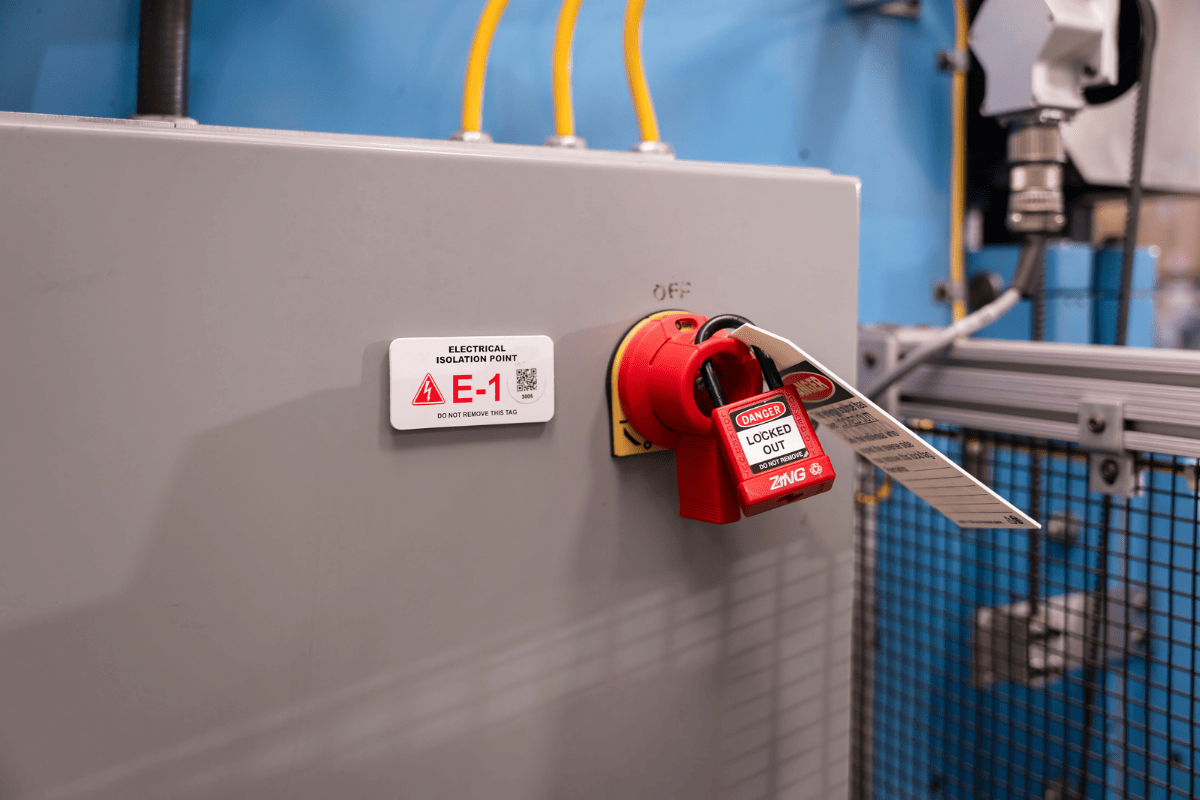
3. Lockout/Tagout (LOTO) Critical for maintenance crews. A solid PDF outlines the 6-step OSHA process: prepare, shut down, isolate, apply lockout, verify isolation, perform work. Limitation: Many workers skip verifying zero energy. Use the PDF to stress verification as non-negotiable.
4. Hand and Power Tool Safety Often overlooked. Talks should cover inspection, guarding, cord management, and PPE. Workflow tip: Pair the PDF with a live demo—show a damaged grinder wheel and explain why it’s a projectile risk.
5. Hazard Communication (HazCom)
With GHS labels and SDS access, workers must understand chemical risks. A strong PDF includes label decoding exercises and storage dos/don’ts. Example: Use a real SDS sheet from your site and walk through Section 4 (First Aid).
6. Electrical Safety Focus on overhead lines, temporary wiring, and arc flash. Include clearance distances and PPE requirements. Realistic scenario: “You’re using a metal ladder near power lines—what’s the minimum safe distance?”
7. PPE Inspection and Use More than just “wear your helmet.” A quality PDF details daily checks: cracks in hard hats, fogged safety glasses, torn gloves. Engagement tip: Bring in defective PPE and ask workers to identify hazards.
These topics form the core of any effective safety program. Rotate them monthly, but adjust based on incident trends.
Where to Find Reliable Toolbox Talks Topics PDFs
You don’t need to create everything from scratch. Several trusted sources offer free, downloadable PDFs designed for real-world use.
| Source | Strengths | Best For |
|---|---|---|
| OSHA.gov | Government-approved, legally sound content | Compliance-focused teams |
| National Safety Council (NSC) | Research-backed, includes discussion guides | High-engagement cultures |
| SafetyInfo.com | 100+ free PDFs, construction-heavy | Field supervisors |
| HSE UK (hse.gov.uk) | Clear visuals, practical checklists | International teams |
| Creative Safety Supply | Industry-specific, includes signage | Manufacturing & warehousing |
Pro tip: Download 2–3 versions of the same topic (e.g., “Hot Work Safety”) and blend them. Customize with your company logo, site layout, and past incident data.
Avoid random blog PDFs. Many are outdated or lack OSHA alignment. Stick to recognized safety organizations or enterprise-level providers.
How to Deliver a Toolbox Talk That Sticks
Having a great PDF is only half the job. Delivery matters.
- Time it right: Monday mornings or after breaks, when attention is highest
- Keep it short: 5–10 minutes. Respect workers’ time
- Engage, don’t lecture: Ask “What would you do?” not “Here’s what you must do”
- Rotate facilitators: Let experienced workers lead occasionally
- Document consistently: Use sign-in sheets tied to the PDF topic and date
- Example workflow:
- Download and customize the “Confined Space Entry” PDF
- Print copies for each team member
- Open with: “Last month, a crew in Texas died in a manhole. What went wrong?”
- Walk through the PDF’s 5 key checks
- Have workers sign and file
This isn’t bureaucracy—it’s behavior change.
Customizing PDFs for Your Industry
A one-size-fits-all approach fails. Tailor your health and safety toolbox talks topics PDF to your operations.
- Construction: Focus on crane ops, scaffolding, trenching
- Manufacturing: Emphasize machine guarding, forklift traffic, noise exposure
- Utilities: Cover arc flash, confined space, high-voltage zones
- Warehousing: Prioritize pallet jack safety, stacking heights, pedestrian zones
Use your incident history. If you’ve had three eye injury near-misses, run a laser-focused talk with a PDF on face protection—even if it’s not on the standard rotation.
Some companies create branded PDF templates: consistent header, company safety pledge, and a QR code linking to video demos. This builds ownership and recognition.
Common Mistakes That Undermine Toolbox Talks
Even with good PDFs, pitfalls sabotage effectiveness.
- Repetition without variation: Running the same fall protection talk every quarter with no updates
- No follow-up: Discussing PPE but not checking compliance on site afterward
- Top-down delivery: Manager reads while workers stand in silence
- Ignoring feedback: Failing to ask, “What safety issue should we talk about next?”
- Poor timing: Holding talks during shift turnover when people are distracted
One crew leader improved engagement by ditching the clipboard. Instead, he used tablets to display the PDF and poll workers anonymously: “How confident are you using the new lift?” Results shaped the next talk.
The Bottom Line: PDFs Are Tools, Not Tasks
A health and safety toolbox talks topics PDF isn’t a compliance checkbox. It’s a communication tool that, when used right, changes behavior. The best ones combine OSHA alignment, visual clarity, and real-world relevance.
Download from trusted sources. Customize for your site. Deliver with energy. Document with care.
Start this week: Pick one high-risk area, find a strong PDF, and run a 10-minute talk that asks questions, shows visuals, and ends with commitment. That’s how safety cultures grow—one conversation at a time.
Frequently Asked Questions
What should be included in a toolbox talk PDF? A clear topic title, key hazards, safety controls, discussion questions, visual aids, and space for attendee signatures.
How often should toolbox talks be held? Weekly or biweekly is ideal, especially in high-risk environments like construction or manufacturing.
Can toolbox talk PDFs be used for training records? Yes—when paired with sign-in sheets and dated logs, they serve as legal proof of training.
Are free toolbox talk PDFs reliable? Some are excellent (OSHA, NSC), but avoid unverified sources. Always check for OSHA or ANSI alignment.
Should toolbox talks be the same for every crew? No. Customize the PDF content to reflect specific job roles, equipment, and site risks.
How long should a toolbox talk last? Aim for 5–10 minutes. Respect workers’ time while covering critical points.
Can digital PDFs replace printed copies? Yes, if devices are available and workers can view them easily. Tablets or projectors work well in meeting areas.
FAQ
What should you look for in Top Health and Safety Toolbox Talks Topics PDF Guides? Focus on relevance, practical value, and how well the solution matches real user intent.
Is Top Health and Safety Toolbox Talks Topics PDF Guides suitable for beginners? That depends on the workflow, but a clear step-by-step approach usually makes it easier to start.
How do you compare options around Top Health and Safety Toolbox Talks Topics PDF Guides? Compare features, trust signals, limitations, pricing, and ease of implementation.
What mistakes should you avoid? Avoid generic choices, weak validation, and decisions based only on marketing claims.
What is the next best step? Shortlist the most relevant options, validate them quickly, and refine from real-world results.